
What Age Should Kids Start Gymnastics? A Guide for Parents
September 11, 2026
If your child is constantly climbing the furniture, attempting cartwheels in the living room, or turning every open space into a place to jump and tumble, you may be wondering: What age should kids start gymnastics?
The good news is that there isn’t one “perfect” age to begin. Children can start learning basic gymnastics movements as toddlers, while older kids can begin gymnastics, tumbling, or Ninja classes with no previous experience.
The best starting point depends on your child’s age, developmental stage, interests, and current skill level. Younger children benefit from classes centered around movement, coordination, and following directions, while older kids can begin developing more specific gymnastics and tumbling skills.
Here’s a class-by-class guide to help parents determine which gymnastics program may be the best fit.
What Is the Best Age to Start Gymnastics?
Children can be introduced to gymnastics concepts as early as the toddler years through age-appropriate parent-and-child classes.
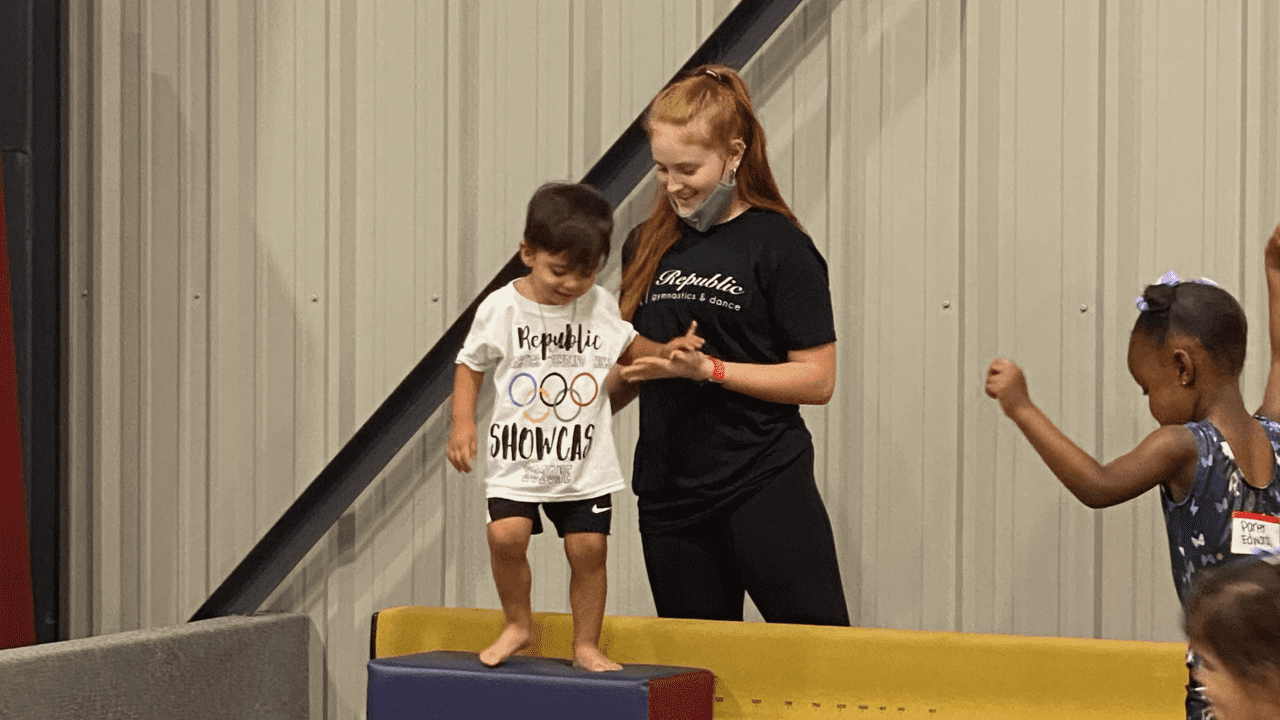
At this age, gymnastics isn’t about perfect cartwheels or complicated skills. Classes focus on fundamental movements such as balancing, climbing, jumping, rolling, and safely exploring different equipment.
As children get older, classes gradually become more structured. Preschoolers can begin developing greater independence and body control, while school-age children can work on specific gymnastics skills and progress through different ability levels.
Starting young can be beneficial, but kids don’t have to begin gymnastics as toddlers to become successful gymnasts. Beginner programs allow children to start at many different ages.
Parent Tot Gymnastics: An Introduction to Movement
For toddlers, Parent Tot gymnastics provides an opportunity to explore movement in a safe, structured environment with a parent or caregiver nearby.
Instead of focusing on traditional gymnastics skills, these classes introduce young children to fundamental movements through age-appropriate activities.
Kids may practice:
- Balancing and coordination
- Climbing and navigating obstacles
- Jumping and landing
- Rolling and basic body positions
- Listening and following simple instructions
- Taking turns and participating with a group
Parent Tot classes can also help children become comfortable in a gym environment before eventually transitioning into more independent classes.
Best for: Toddlers who are ready to move, explore, and become comfortable with structured physical activity.
Preschool Gymnastics: Building Confidence and Independence
As children reach the preschool years, gymnastics classes become a little more independent and structured.
Preschool gymnastics builds on basic movement skills while introducing children to gymnastics fundamentals in a fun, supportive environment. Kids begin learning how to control their bodies, follow a class routine, and perform skills with less assistance from a parent.
Classes may incorporate activities that develop:
- Balance
- Flexibility
- Coordination
- Strength
- Spatial awareness
- Listening skills
- Confidence and independence
Preschool gymnastics can be especially helpful for energetic kids who love climbing, jumping, flipping, and learning through movement.
Best for: Preschool-age children who enjoy physical activity and are ready to participate more independently.
Girls Gymnastics: Developing Skills and Technique
Once children reach school age, recreational gymnastics provides more opportunities to develop specific skills and progress at their own pace.
Girls gymnastics classes typically introduce and build skills across different gymnastics events and equipment. Beginners can learn fundamental techniques while more experienced gymnasts continue progressing toward increasingly challenging skills.
Depending on their level, gymnasts may work on skills involving:
- Floor exercise
- Balance
- Vault
- Bars
- Strength and flexibility
- Handstands, cartwheels, bridges, and other fundamental skills
One of the biggest misconceptions parents have is that their child is “too old” to start gymnastics because they didn’t begin when they were a toddler. Recreational gymnastics is designed for different ability levels, which means school-age kids can still start as beginners and build their skills over time.
Best for: Girls who want to learn traditional gymnastics skills, improve strength and flexibility, or continue progressing through recreational gymnastics levels.
Ninja Classes: For Kids Who Love to Climb, Run, and Conquer Obstacles
Not every child who loves movement is immediately interested in traditional gymnastics. For kids who would rather climb, swing, jump, and tackle obstacles, Ninja classes can be another great introduction to the gym.
Ninja training combines physical challenges with skills such as balance, agility, strength, coordination, and body control.
Children may navigate obstacle courses, practice climbing and hanging skills, work on safe landings, and challenge themselves to complete increasingly difficult movements.
The fast-paced environment can be especially appealing to kids who enjoy obstacle-course-style activities or need an engaging outlet for their energy.
Best for: Active kids who enjoy climbing, obstacle courses, physical challenges, and Ninja Warrior-style activities.
Tumbling Classes: For Kids Interested in Floor Skills
If your child mainly wants to learn cartwheels, roundoffs, handsprings, and other floor-based skills, tumbling may be a better fit than a traditional gymnastics class.
Tumbling focuses specifically on floor skills and allows athletes to progress based on their current ability rather than simply their age.
Beginners typically start by developing strong fundamentals before progressing toward more advanced skills. This helps kids build proper technique instead of rushing into skills their bodies aren’t ready to perform safely.
Tumbling can also be a great option for children involved in cheerleading or dance who want to strengthen the skills they use in those activities.
Best for: Kids who are primarily interested in floor skills or want to improve tumbling for gymnastics, cheer, or dance.
Gymnastics Classes by Age: Which Program Is Right for Your Child?
Choosing a class doesn’t have to be complicated. Start with your child’s age, then consider what type of movement they naturally enjoy.
| Stage | Recommended Class | What Kids Can Work On |
| Toddler | Parent Tot | Movement, balance, coordination, climbing, and confidence |
| Preschool | Preschool Gymnastics | Basic gymnastics, body control, listening, and independence |
| School Age | Girls Gymnastics | Gymnastics fundamentals, strength, flexibility, and skill progression |
| Active Kids | Ninja | Obstacles, agility, climbing, strength, and coordination |
| Skill-Focused Kids | Tumbling | Cartwheels, roundoffs, handsprings, and progressive floor skills |
Age is a helpful starting point, but it shouldn’t be the only deciding factor. A child’s experience, confidence, interests, and current abilities can all influence which class will be the best fit.
Is It Ever Too Late for a Child to Start Gymnastics?
For recreational gymnastics, there is no single age when a child suddenly becomes “too old” to start.
A child who begins at age 7, 9, or even later can still develop gymnastics skills, become stronger and more flexible, and enjoy the sport. They may simply begin in a class designed for their age and current ability rather than alongside children who have trained for several years.
The same applies to tumbling and Ninja programs. Kids can enter at different stages and progress as they develop strength, coordination, technique, and confidence.
Rather than worrying about whether your child started “early enough,” focus on finding a program where they can learn safely and enjoy the process.
How to Know Which Gymnastics Class Is the Best Fit
If you’re deciding between gymnastics, tumbling, and Ninja classes, pay attention to what your child already enjoys doing.
A child who loves handstands, cartwheels, and gymnastics equipment may enjoy a traditional gymnastics program. A child constantly practicing floor skills may prefer tumbling, while a child who loves climbing, racing through obstacles, and physical challenges may feel right at home in Ninja.
Parents should also consider:
- Their child’s age and maturity
- Previous gymnastics or tumbling experience
- Current skill level
- Comfort participating independently
- Personal interests and goals
If you’re still not sure which program is the right fit, a free trial class at Republic Gymnastics is a great way to find out. Your child can experience the class firsthand, meet the coaches, and get a feel for the program before you decide which option works best for them.
Most importantly, choose a class that gives your child room to learn, progress, and have fun.
Find the Right Gymnastics Class at Republic Gymnastics & Dance Center
Whether your child is taking their first gymnastics class or looking for a new challenge, Republic Gymnastics & Dance Center offers programs for children at different ages and skill levels.
From Parent Tot and Preschool Gymnastics to Girls Gymnastics, Ninja, and Tumbling, families can choose a program based on their child’s developmental stage, interests, and experience.
Explore our gymnastics programs to find the class that fits your child and help them start building strength, coordination, confidence, and new skills in the gym.