
How Ninja Training Builds Stronger, More Confident Kids
August 24, 2026
If your child is constantly climbing, jumping, racing across the playground, or turning the living room into their own obstacle course, Ninja training might be exactly their kind of activity.
Ninja training combines obstacle courses with gymnastics-based movements to challenge kids in ways that go beyond simply running around and burning energy. Kids climb, swing, jump, balance, and work their way through new challenges while developing strength, coordination, confidence, and problem-solving skills.
For kids who love to move and challenge themselves, Ninja training provides an active and engaging environment where they can continue developing new skills and working toward new goals.
Here are some of the biggest benefits of Ninja training for kids.
What Is Ninja Training for Kids?
Ninja training is an obstacle-based activity that combines elements of gymnastics, agility training, climbing, balance, and strength.
Instead of practicing only one type of movement, kids work through different physical challenges. They may climb or swing across an obstacle, balance their way through another, practice jumping and landing, and then put multiple skills together to complete a course.
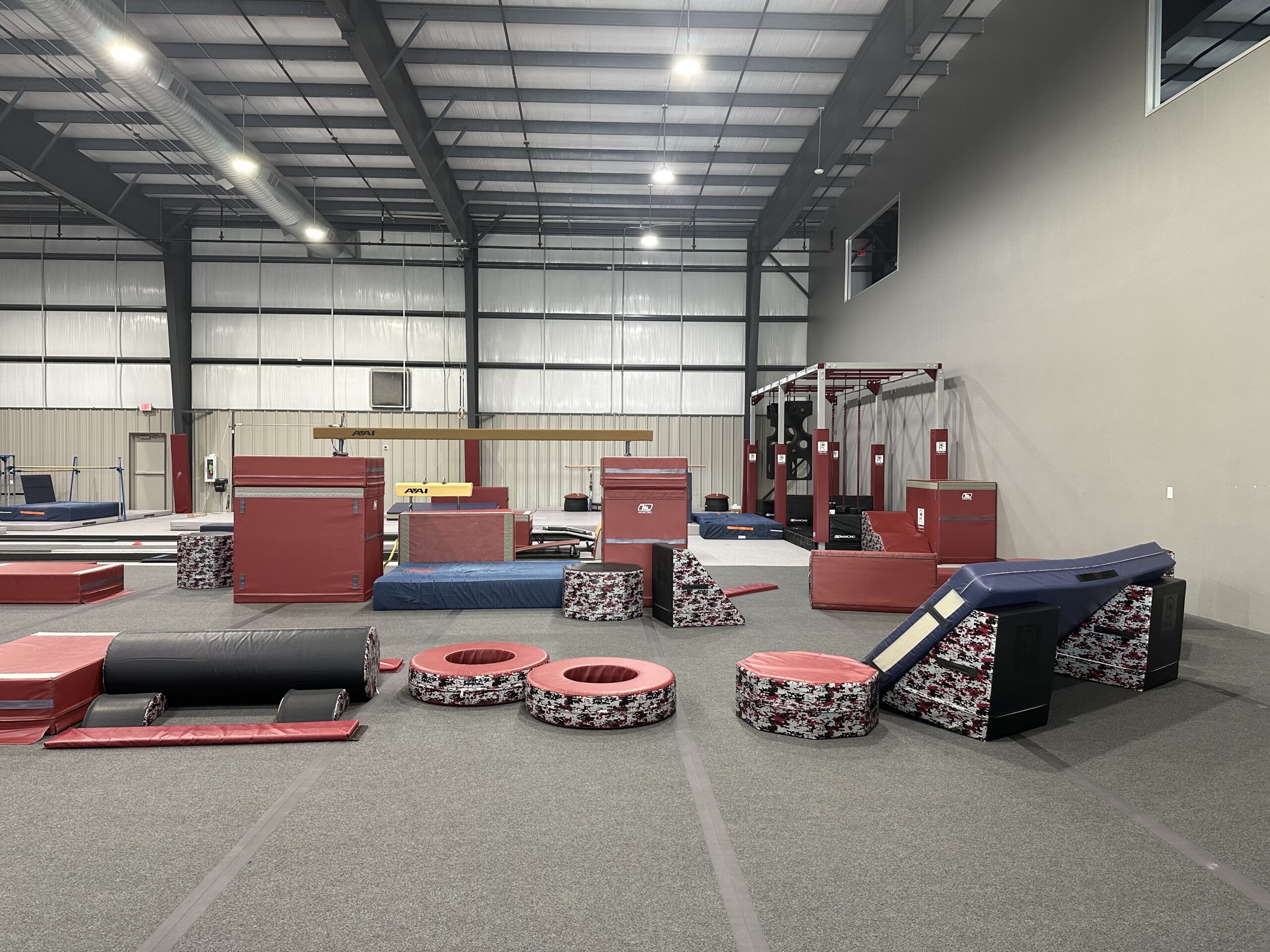
At Republic Gymnastics, our Ninja program uses gymnastics-based movements and guided obstacle courses to help kids develop strength, speed, balance, coordination, grip strength, and total-body control.
The obstacles and challenges can change as kids improve, giving them new goals to work toward instead of simply repeating the same workout.
And that brings us to one of the biggest reasons kids enjoy Ninja training in the first place.
1. It Makes Staying Active Fun
Tell a kid they’re going to spend an hour exercising and you might not get much enthusiasm.
Tell them they’re going to climb, swing, jump, race through obstacles, and see whether they can conquer a new course? Completely different conversation.
Ninja training disguises a serious amount of physical activity as play.
Kids are moving their entire bodies as they navigate obstacles. Depending on the activity, they may need to pull themselves up, stabilize their core, jump from one point to another, maintain their balance, or move quickly between challenges.
Because every obstacle presents something different, kids stay mentally engaged while they’re physically active. For families looking for an activity that keeps kids moving while giving them something new to work toward, Ninja training offers plenty of variety.
2. Ninja Training Builds Full-Body Strength
You don’t need weights and traditional strength exercises to help kids become stronger.
Ninja obstacles naturally require children to use their own body weight.
Climbing, hanging, swinging, and pulling can develop upper-body and grip strength. Jumping and landing challenge the legs. Balancing and moving between obstacles require kids to engage their core.
Over time, kids can develop strength that supports not only Ninja training but other sports and physical activities as well.
This full-body approach is part of what makes Ninja training different from activities that repeatedly focus on one specific movement or skill.
3. Kids Improve Balance, Coordination, and Body Control
Completing an obstacle course isn’t only about being strong.
Kids also have to figure out how to control their bodies.
They may need to balance on a narrow surface, coordinate their hands and feet while climbing, judge the distance of a jump, or control a landing before immediately moving to the next obstacle.
These activities develop important foundational athletic skills, including:
- Balance
- Coordination
- Agility
- Spatial awareness
- Body control
- Speed and reaction time
Those abilities can transfer to gymnastics, dance, team sports, martial arts, playground activities, and everyday movement.
For younger children, learning how their bodies move through space creates a foundation they can continue building on as they grow.
4. Every Obstacle Gives Kids a Chance to Build Confidence
One of the most rewarding parts of Ninja training isn’t always completing an obstacle.
Sometimes it’s completing an obstacle that a child couldn’t do before.
A kid might struggle to make it across a particular challenge on their first attempt. With coaching and practice, they learn where to place their hands, how much momentum they need, or how to better control their movement.
Then they try again.
Getting a little farther each time gives kids something tangible to measure. Eventually, the obstacle that once seemed impossible becomes something they know how to do.
That kind of progress can be a powerful confidence builder.
Instead of confidence coming only from winning or being better than someone else, kids can learn to recognize their own improvement.
5. It Teaches Persistence Without Feeling Like a Lesson
Ninja obstacles are supposed to be challenging.
Kids won’t successfully complete every obstacle on their first attempt—and that’s actually one of the benefits.
Training gives children repeated opportunities to experience the cycle of trying something, struggling, adjusting their approach, and trying again.
Maybe they lose their balance. Maybe they can’t quite reach the next hold. Maybe they complete three-fourths of a course before getting stuck.
The goal becomes figuring out what to do differently next time.
Over time, kids learn that struggling with something doesn’t automatically mean they can’t do it. Sometimes it means they haven’t figured it out yet.
That lesson can extend far beyond the gym.
6. Obstacle Courses Get Kids Thinking
There’s a mental side to Ninja training, too.
Every new obstacle is essentially a physical problem to solve.
Where should I put my feet? Should I move quickly or slow down? How far do I need to jump? What happens if I try it this way instead?
Kids have to pay attention, make decisions, remember techniques, and adjust their movements based on what happens.
As obstacle courses become more challenging, children can begin connecting multiple skills and planning how they’ll move from one obstacle to another.
They’re exercising their brains at the same time as their bodies—just without a worksheet involved.
7. It Can Be a Great Alternative to Traditional Team Sports
Not every active kid wants to play soccer, baseball, basketball, or another traditional team sport. And they don’t have to.
Ninja training gives kids another way to be athletic.
Rather than competing against another team, much of the challenge comes from improving individual skills and accomplishing personal goals. Kids can still train alongside others, encourage classmates, take turns, and participate in group activities without the pressure that sometimes comes with traditional competitive sports.
That can make Ninja training particularly appealing to children who love being active but haven’t found a sport that clicks with them.
8. Kids Still Learn Teamwork and Social Skills
Ninja training may focus heavily on individual progress, but kids aren’t training in isolation.
Classes give children opportunities to interact with other kids, watch how others approach obstacles, cheer one another on, and celebrate progress together.
They also practice important skills like listening to instructors, waiting their turn, following directions, and respecting the other kids using the course.
Participating in an ongoing class also gives kids the opportunity to train alongside familiar faces, build friendships, and encourage one another as they develop new skills.
9. Ninja Training Can Grow With Your Child
One of the best things about obstacle-based training is that the challenge doesn’t have to stay the same.
As children become stronger and more coordinated, obstacles can become more complex. They may work toward longer courses, more challenging movements, better technique, or completing skills with greater control.
Beginners can focus on fundamental movements while more experienced kids continue progressing.
That means children don’t need previous Ninja or gymnastics experience to benefit from getting started.
At Republic Gymnastics, Mini Ninja classes are available for ages 4–5, while Ninja classes for ages 6+ build on those foundational skills with more advanced obstacles and greater emphasis on strength, control, and technique.
The Benefits of Ongoing Ninja Training
Like many physical activities, Ninja training gives kids the opportunity to build on what they’ve already learned.
Regular classes allow children to practice foundational movements, develop their technique, and take on new challenges as their abilities grow. An obstacle that feels difficult when they first begin may become more manageable as they develop greater strength, balance, coordination, and confidence.
Ongoing training also gives kids goals to work toward. Rather than completing an obstacle once and moving on, they can continue refining their skills and preparing for more advanced challenges.
That progression can help keep the activity engaging while giving kids a sense of accomplishment as they see how far they’ve come.
Is Ninja Training Right for Your Child?
You don’t need to have a future Ninja competitor at home.
Ninja training can be a great option for kids who:
- Love climbing, jumping, swinging, and obstacle courses
- Have lots of energy and enjoy staying active
- Want to become stronger or more coordinated
- Enjoy individual challenges and personal goals
- Haven’t connected with traditional team sports
- Are looking for a fun, active extracurricular activity
- Already participate in another sport and want to develop additional athletic skills
Most importantly, kids can start at their own level and progress from there.
Try Ninja Gymnastics at Republic Gymnastics
Ninja training gives kids a place to do what many of them naturally love to do—climb, jump, swing, explore, and challenge themselves.
Along the way, they’re also developing strength, coordination, balance, problem-solving skills, persistence, and confidence.
Republic Gymnastics offers Ninja Gymnastics classes in Cypress, TX for kids ages 4 and up, with age-appropriate programs designed to keep children moving and progressing.
Whether your child is completely new to Ninja training or ready to continue building their skills, there’s always another challenge to work toward.