
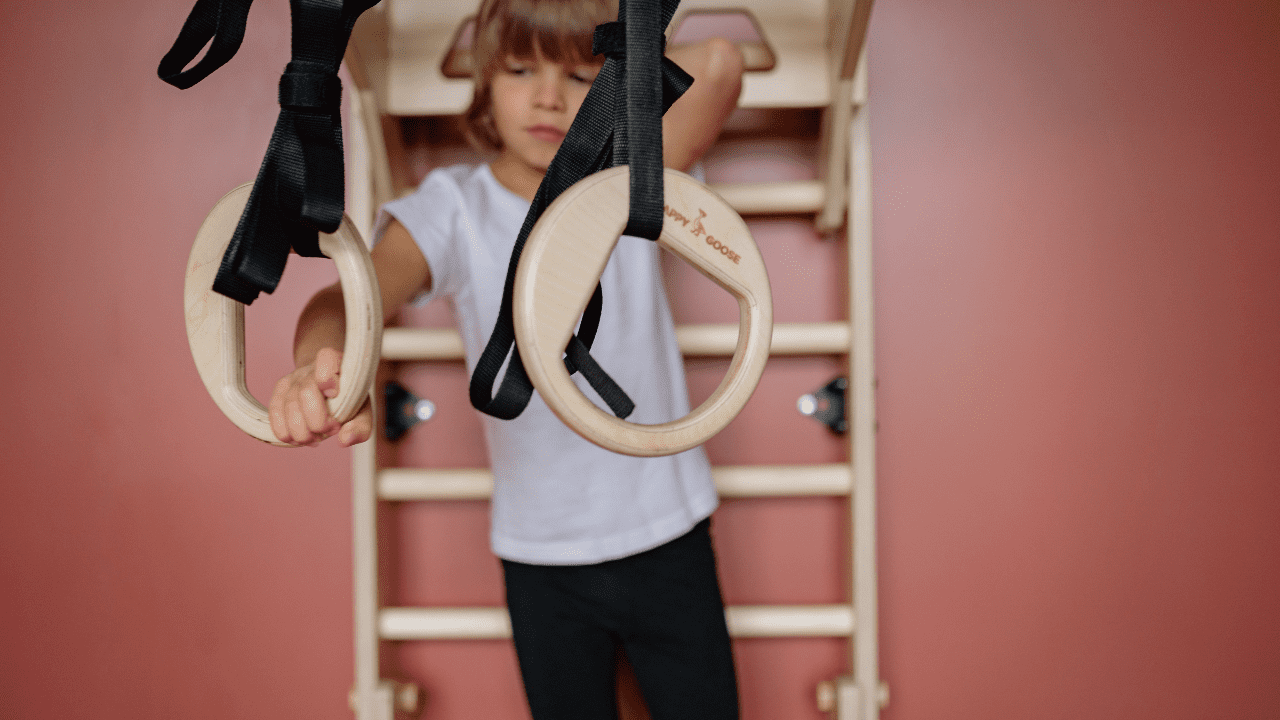
At What Age Can Kids Start Strength Training Through Gymnastics?
May 12, 2026
“Can my child start strength training?” This is a question many parents ponder, often with a hint of trepidation. Visions of tiny tots lifting barbells might dance in their heads, sparking concerns about injury or even stunted growth. But what if I told you that not only is strength training safe and beneficial for children, but that one of the most effective and natural ways to introduce it—through age-appropriate physical activity—is through gymnastics?
Forget the heavy weights and intimidating gym environments. We’re talking about building foundational strength, coordination, and resilience through structured physical activity in a way that’s inherently fun and developmentally appropriate. Let’s peel back the layers of misconception and discover why gymnastics is the perfect gateway to a strong, healthy future for your child.
Early Childhood (Ages Walking-5): Play-Based Movement and Body Awareness
For our youngest gymnasts, the focus is entirely on play-based movement. Think running, jumping, crawling, climbing, rolling – all the fundamental movements that build gross motor skills and body awareness. At this age, strength training isn’t about reps and sets; it’s about exploring movement patterns and understanding what their body can do.
In a gymnastics setting, this looks like obstacle courses, imaginative play that encourages climbing and hanging, and simple tumbling. Coaches guide them through activities that naturally build core strength, balance, and coordination without ever using the term “strength training.” It’s about fostering a love for movement and setting the stage for more structured activities later on.
Elementary School (Ages 5-10): Introducing Structured Play and Skill Development
As children enter elementary school, their coordination improves, and they can follow more complex instructions. This is a fantastic age to introduce more structured play that incorporates specific gymnastics skills. While still very much play-based, there’s a greater emphasis on learning proper technique for basic movements.
They’ll begin to learn rolls, handstands against a wall, cartwheels, and basic bar skills. These activities inherently build strength in a progressive manner. For example, holding a tuck position on the bars builds abdominal strength, while attempting a forward roll develops control and spatial awareness. The goal here is still enjoyment and exploration, but with a gentle nudge towards refining movement patterns and building specific physical competencies.
Pre-Adolescence (Ages 10-13): Gradual Progression and Proper Form
During pre-adolescence, children are often ready for more challenging skills and a greater focus on proper form. Their bodies are becoming stronger and more coordinated, making them capable of executing more complex movements. This is when they might start working on more advanced bar routines, vaulting, and floor exercises that demand significant strength, power, and flexibility.
Coaches at this stage will emphasize precision in technique and introduce progressions that gradually increase the demands on their muscles. For example, moving from a straddle hold on the floor to a straddle hold on the parallettes. The strength gained is a direct result of mastering these increasingly difficult gymnastic skills, always under the watchful eye of an experienced instructor who prioritizes safety and correct execution.
How Kids Strength Training Through Gymnastics Benefits Children
Beyond stronger muscles and bones, the benefits of strength training for children, especially through the lens of gymnastics, are far-reaching. We’re not just building little athletes; we’re building resilient, confident, and well-rounded individuals with growing self-confidence.
Imagine a child learning to hold a handstand. It requires not just arm and core strength, but also incredible balance, focus, and body awareness. Successfully achieving that handstand isn’t just a physical win; it’s a monumental boost to their self-esteem and self-confidence. They learn perseverance, discipline, and the joy of mastering new skills. Gymnastics inherently fosters improved coordination, flexibility, and agility—skills that translate to every other sport and everyday activity. It’s a holistic approach to development, nurturing both the physical and mental aspects of a child’s well-being.
How Bodyweight Training in Gymnastics Builds Foundational Strength for Kids
Gymnastics is, at its core, the ultimate bodyweight training program. From climbing ropes and swinging on bars to tumbling across the floor, every movement requires a child to manipulate and control their own body against gravity, steadily building muscle strength along the way. This isn’t just about building big muscles; it’s about developing functional strength and age-appropriate muscle strength that supports how kids move.
Consider the simple act of a forward roll. It engages the core, builds muscle strength in the neck and back, and improves body awareness. A pull-up on the uneven bars develops significant upper-body and grip muscle strength. These are compound movements that work multiple muscle groups simultaneously, mimicking the way our bodies move in the real world. This type of training builds a robust foundation of muscle strength, endurance, and proprioception (the sense of where your body is in space) that is invaluable for any physical pursuit. It’s like building a house—you start with a strong foundation, not just by painting the walls. Preparing Young Bodies for Life Through Kids Strength Training
The strength, flexibility, and coordination gained through gymnastics aren’t just for the competitive arena; they are life skills. A child with a strong core and good balance is less likely to suffer falls. A child with well-developed muscles and connective tissues is better equipped to handle the rigors of playground antics, school sports, and simply growing up.
Gymnastics instills an understanding of how their body moves and what it’s capable of. This body awareness is a superpower, allowing them to participate in activities with greater confidence and reduced risk of injury. It’s about creating resilient bodies that can navigate the physical demands of life with ease and joy, long after their gymnastics days might be over.
Key Considerations for Safe and Effective Training
Regardless of age, safety and effectiveness should always be paramount. This isn’t just about avoiding injury; it’s about ensuring a positive and sustainable experience that builds a lifelong love for movement.
Expert Guidance: The Role of Qualified Coaches
The single most important factor for safe and effective kids’ strength training, especially through gymnastics, is the presence of qualified coaches. A good coach understands child development, exercise physiology, and the proper progressions for gymnastics skills. They know how to spot potential issues, modify exercises, and, most importantly, create a positive and encouraging environment. They act as guardians of technique, ensuring children learn to move correctly before attempting more advanced skills. This is not a “DIY” project; professional guidance is non-negotiable.
Focus on Form, Not Weight: Prioritizing Technique
In gymnastics, the “weight” is the child’s own body. Therefore, the equivalent of “lifting too heavy” is attempting a skill without good form. Prioritizing technique and good form over achieving a specific skill quickly is crucial. A perfect handstand held for a second with good form is infinitely more valuable than a wobbly, unsupported attempt that puts undue stress on joints. Coaches will constantly emphasize proper alignment, muscle engagement, controlled movements, and good form, laying a strong foundation that prevents injury and allows for long-term progress.
Progressive Overload: Gentle Challenges for Growing Bodies
The principle of progressive overload means gradually increasing the demands on the body to stimulate adaptation and growth. In kids’ strength training through gymnastics, this isn’t about adding more weight plates. It’s about increasing the difficulty of a skill, the duration of a hold, or the complexity of a routine to safely build muscular strength over time.
For a young child, simply holding a plank for an extra few seconds is progressive overload that supports developing muscular strength. For an older child, moving from a supported handstand to an unsupported one, or learning a new vaulting technique, represents the same principle. This gentle, consistent challenge ensures their bodies adapt and build muscular strength without being overwhelmed.
Rest and Recovery: The Unsung Heroes of Development
Growth doesn’t happen during the workout; it happens during recovery. Children, especially active ones, need adequate sleep and downtime for their bodies to repair and rebuild after training sessions that include structured movements and appropriate repetitions. Overtraining—whether from too many practices or excessive repetitions—can lead to fatigue, decreased performance, and an increased risk of injury. A well-designed gymnastics program will incorporate appropriate rest days, balanced training volumes, and will encourage healthy lifestyle habits outside of the gym. It’s not about training harder or doing more repetitions; it’s about training smarter and allowing the body the time it needs to benefit from the training.
Listening to Their Bodies: Recognizing Red Flags and Preventing Injury
Children are not always adept at articulating pain or discomfort. It’s vital for parents and coaches to teach young athletes to listen to their bodies and to recognize signs of overexertion or potential injury. Persistent pain, especially in joints, unusual fatigue, or a decline in enthusiasm in young athletes should always be taken seriously. A good gymnastics program will foster an open dialogue where children feel comfortable communicating how they feel, and coaches are vigilant in observing their young athletes for any warning signs.
Integrating Strength Training into a Child’s Routine
One of the greatest advantages of gymnastics is how seamlessly it integrates strength training into a child’s routine, often without them even realizing it.
How Gymnastics Turns Kids Strength Training Into Play
Children learn best through play. Gymnastics inherently understands this. When a child is attempting to climb the rope, they’re not thinking, “I’m doing upper body strength training.” They’re thinking, “I want to reach the top!” When they’re trying to balance on the beam, they’re not calculating core engagement; they’re concentrating on not falling off. This makes the strength-building process enjoyable and sustainable. It leverages their natural curiosity and desire to move, turning what could be a chore into an exciting adventure.
How Gymnastics Uses Variety to Keep Kids Strength Training Engaging
Repetitive, monotonous exercises can quickly lead to boredom and burnout, especially for children. Gymnastics, by its very nature, offers incredible variety, beginning with engaging warm-up activities that prepare their bodies for movement and ending with thoughtful cool-downs that help them recover. They might be tumbling on the floor one moment, swinging on the bars the next, then balancing on the beam or vaulting. Each apparatus and each skill demands different muscle groups and movement patterns, keeping their bodies challenged in diverse ways and their minds engaged. This constant novelty—paired with intentional warm-up and cool-down routines—ensures that “strength training” never feels like a chore, but rather an exciting exploration of movement.
Why a Supportive Environment Matters in Kids Strength Training
A child’s emotional well-being is just as important as their physical development, especially for beginners. A positive and supportive environment, where effort is praised over perfection and mistakes are seen as learning opportunities, is crucial for every beginner. In gymnastics, beginner athletes learn to encourage their teammates, celebrate small victories, and develop resilience in the face of challenges. This supportive atmosphere not only makes the strength training process more enjoyable for beginners but also instills valuable life lessons about perseverance, teamwork, and self-belief.
Ready to Get Started? Experience Kids Strength Training at Republic Gymnastics & Dance
The question isn’t if children should strength train, but how. And the answer, often overlooked, is through dynamic, engaging, and developmentally appropriate activities like gymnastics. It’s a holistic approach that builds not just physical strength, but also confidence, coordination, and a lifelong love for movement.
If you’re ready to provide your child with a powerful foundation for physical literacy and overall well-being, consider the unique benefits of gymnastics. At Republic Gymnastics & Dance, our experienced coaches are dedicated to guiding children through a safe, fun, and effective strength-building journey, tailored to their age and developmental stage.