
Tumbling Classes for Toddlers in Cypress, TX: What Parents Should Know
May 5, 2026
If you have a toddler, you know that the “terrible twos” or “thriving threes” are defined by a single, unyielding law of physics: if it exists, it must be climbed. Whether it’s the back of your microfiber sofa or the playground structure at Boardwalk at Towne Lake, toddlers are natural-born explorers with zero fear and an abundance of energy.
In Cypress, Texas, parents are increasingly looking for ways to channel that kinetic energy into something more productive than furniture-scaling. That is where toddler tumbling comes in. Far from being a rigid, Olympic-style training ground, these classes are designed as a developmental playground where play meets purpose. This guide will walk you through why Cypress families are flocking to the mats and what you should look for when choosing a home for your child’s first forward roll.
At Republic Gymnastics & Dance Center, our tumbling classes in Cypress, TX are designed to help young children improve coordination, balance, strength, listening skills, and confidence through movement-based activities that keep learning fun and engaging.
What Age Should Toddlers Start Tumbling?
Many children can begin tumbling or introductory gymnastics classes as early as walking age through 3 years old, depending on the program structure.
Toddler tumbling classes focus less on “perfect technique” and more on:
- Basic body awareness
- Balance and coordination
- Motor skill development
- Following directions
- Social interaction
- Building confidence in new environments
For younger toddlers, parent participation classes can help children feel more comfortable while exploring movement in a supportive setting.
Why Toddler Tumbling is Growing in Cypress
For a child under five, “exercise” isn’t a chore; it is an act of discovery. When a toddler steps onto a high-density foam mat for the first time, they aren’t just learning gymnastics—they are learning how their body interacts with the world. In a community like ours, where the Texas heat often keeps us indoors, these climate-controlled gyms offer a vital outlet for physical expression. It’s a place where “no jumping on the bed” is replaced with “how high can you jump on this trampoline?”
Understanding the Benefits of Early Gymnastics
It is easy to watch a class of three-year-olds and see nothing but chaotic cuteness. However, beneath the surface of the giggles and the occasional rogue run-around, significant neurological and physical development is taking place.
Physical Milestones and Motor Skills
Think of tumbling as the “master sport.” Before a child can catch a baseball or kick a soccer ball, they need proprioception—an internal sense of where their limbs are in space. Toddler classes focus on fundamental motor skills like cross-lateral movement (using both sides of the body simultaneously), which is essential for brain development.
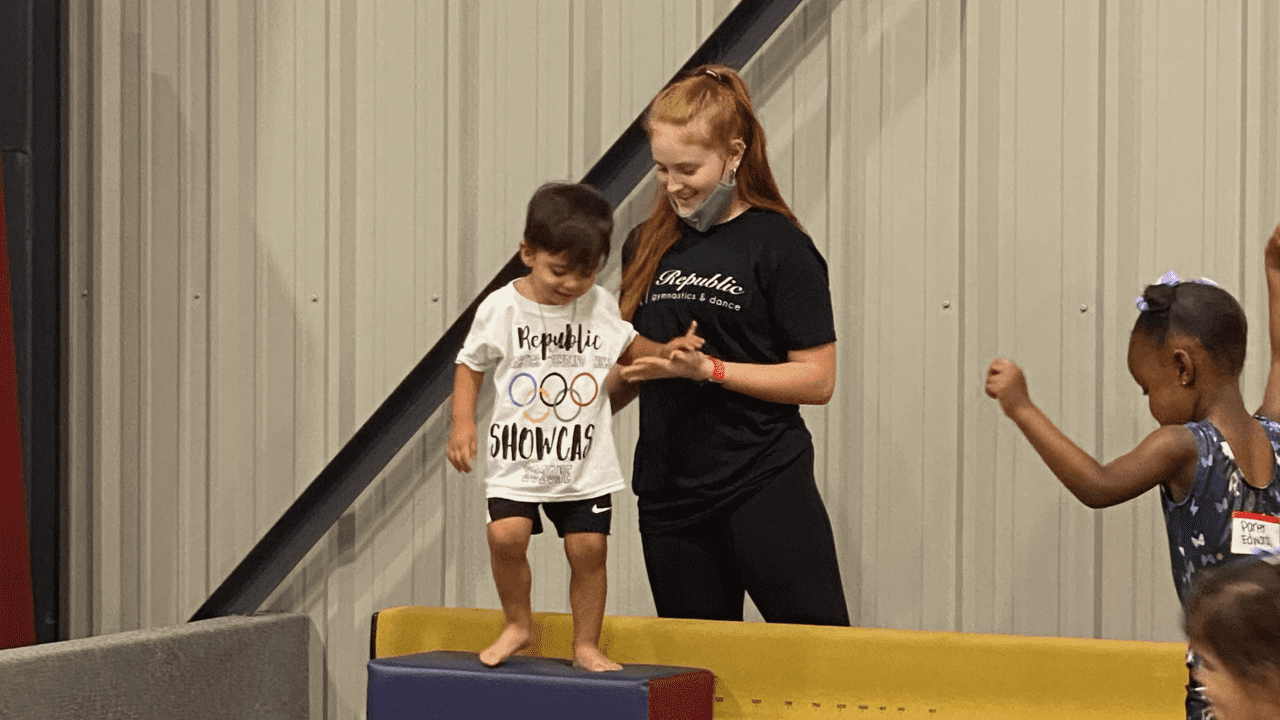
When your child walks across a low balance beam, they aren’t just practicing for the Olympics; they are strengthening their core and ankles. When they hang from a low bar, they are building the grip strength and upper-body stability that will eventually help them hold a pencil in kindergarten. These are the building blocks of physical literacy that will serve them in every sport they try later in life.
The Hidden Power of “Social” Play
For many toddlers, a gymnastics class is their first “structured” social environment outside of a playdate or daycare. The gym becomes a laboratory for social interaction. They learn the excruciatingly difficult art of waiting in line. They learn to watch a peer succeed and clap for them. They learn that “coach” is a trusted adult who isn’t Mom or Dad.
These soft skills are often more impactful than the physical ones. Tumbling teaches kids how to navigate a shared space, respect boundaries, and cooperate with others. In the safe, padded confines of a Cypress gym, the stakes are low, but the social rewards are high.
Building Cognitive Connections Through Routine
There is a fascinating link between physical movement and cognitive function. Following a “circuit” in a tumbling class—crawl through the tunnel, jump over the block, roll on the wedge—requires a child to sequence information. This is an early form of logic and problem-solving.
Repetition is the secret sauce here. When a toddler repeats a routine week after week, they are building neural pathways. They begin to anticipate what comes next, which fosters a sense of security and competence. This “rhythm” of the gym helps settle busy minds and gives children a framework for learning that they will eventually carry into the classroom.
What to Expect from Different Class Formats
Not all toddler classes are created equal. Depending on your child’s age and temperament, you’ll find three primary formats in the Cypress area.
Parent & Tot Sessions
Typically designed for walkers up to age three, these classes are a partnership. You aren’t just a spectator; you are your child’s primary spotter and cheerleader. These sessions are less about perfect form and more about bonding.
In a Parent-and-Me class, the instructor guides the group, but you are the one helping your child navigate the “donut” mat or encouraging them to reach for the rings. It’s a wonderful way to burn off energy together while meeting other local parents who are likely dealing with the same nap-time struggles and teething woes as you are.
Preschool Classes
Once a child hits that three-to-four-year-old range, many gyms start encouraging the “big kid” transition—and this is where preschool gymnastics really comes into play. It’s often the first time a child steps into class without a parent right by their side. It can feel like a big moment (for both of you), but it’s also where you start to see their independence and confidence really grow.
In these classes, the focus naturally shifts a bit. Kids begin working on following multi-step directions, learning basic gymnastics terms like “tuck,” “straddle,” and “pike,” and moving through simple circuits on their own. It’s still fun, still high-energy—but now there’s a layer of structure that helps them build focus and responsibility.
And honestly, it’s the little moments that make it all worth it. Watching your preschooler complete a rotation by themselves, then glance over at the viewing area with the biggest smile or a proud thumbs up… that’s the kind of memory that sticks.
The Transition to Pre-K Tumbling
As children approach five, the “play” becomes more structured. This is where we see the transition from general movement to specific tumbling skills like cartwheels, handstands against the wall, and more controlled rolls. At this stage, instructors begin to emphasize form—pointed toes and straight legs—preparing those who might want to move into competitive gymnastics or cheerleading in the future.
Where Cypress Families Come for Gymnastics & Dance
Republic Gymnastics & Dance
A standout in the local community is Republic Gymnastics & Dance Center. Conveniently located for Cypress families, Republic has built a strong reputation for its well-rounded approach to youth programs—and the best way to experience it is by starting with a trial class.
What makes them unique is the blend of dance and gymnastics. At the toddler age, kids don’t need to choose between being a “gymnast” or a “dancer”… they just need to move, explore, and have fun. Republic creates an environment where strength, coordination, and confidence are introduced through high-energy, age-appropriate classes that meet kids right where they are.
Their coaches are experienced, patient, and know exactly how to handle all the “wiggles” that come with this age. Every child is encouraged, supported, and given the space to grow at their own pace—no matter their starting point. And with a simple trial class, you can see firsthand how your child responds, connects, and begins building confidence from day one.
Essential Tips for a Successful First Day
The first day of any new activity can be a whirlwind. To ensure your little one (and you) has a positive experience, a little preparation goes a long way.
What Your Toddler Should Wear
Forget the fancy sequins for now. Safety and mobility are the priorities. For girls, a simple leotard is standard, but footless leggings or snug-fitting shorts are often preferred so they don’t slip on the equipment. For boys, a T-shirt that isn’t too baggy (it shouldn’t fall over their face when they are upside down) and athletic shorts are perfect.
Most gyms require children to be barefoot to provide better grip on the beams and mats. Avoid jewelry, and if your child has long hair, pull it back in a secure ponytail or “space buns” to keep it out of their eyes.
Managing Separation Anxiety at the Gym
It’s completely normal for a toddler to cling to your leg during those first few minutes of class. Every experienced coach has seen it all—from “Velcro babies” to full-on floor protests. And honestly, it’s all part of the process of getting comfortable, learning the environment, and easing into both skill building and socialization.
The best thing you can do? Trust the process. More often than not, once the music starts or something fun like the parachute comes out, you’ll see that hesitation start to fade. They begin to engage, watch other kids, and slowly join in—building confidence, new skills, and connections along the way.
If your child is having a tough day, try to stay within their line of sight but resist jumping back in unless the coach asks. That little bit of space helps them learn independence while still feeling supported. Consistency is what makes the difference—the more they experience the gym as a safe, fun place, the more comfortable they become… and before you know it, they’re the ones running straight to the mat.
The Importance of Consistency Over Perfection
In the world of toddler tumbling, success isn’t measured by a perfect 10.0 score. It’s measured in the little moments—the child who was too nervous to walk on the beam last week but gave it a try today, or the one who finally waited their turn without a meltdown. Those small wins are what build confidence and start shaping their self-esteem in a really real way.
And don’t be discouraged if your child spends the first few classes wandering or a little off-task. They’re taking it all in, getting comfortable, and figuring things out at their own pace. That’s part of the process.
Real growth happens over time, not overnight. Keep showing up, celebrate the small victories, and keep the focus on having fun. Because when kids feel safe, supported, and proud of themselves—even in the tiniest ways—that’s where the magic really happens.
Tumbling Classes for Toddlers in Cypress, TX
At Republic Gymnastics & Dance Center, we create a fun, supportive environment where toddlers can stay active, build confidence, and develop foundational movement skills at their own pace.
Our classes are designed to help young children feel successful while introducing them to the fundamentals of tumbling and gymnastics through engaging, age-appropriate instruction.
If you’re looking for toddler tumbling classes in Cypress, TX, Republic Gymnastics & Dance Center is here to help your child learn, move, and grow.